George Washington’s Farewell Address
“A republic is kept not by power, but by the character of its citizens.”
In 1796, George Washington was finishing his second term as the first president of the United States. Many Americans expected him to serve for life, as kings did. Instead, he chose to step down voluntarily.
That choice alone sets a powerful precedent: power in a republic must be temporary. How did George Washington think about the newly constructed Republic?
Today, many people in the United States identify first as members of a political party, second as American citizens, and only afterward as human beings. This order of priorities is deeply problematic. It should be the reverse.
We begin as human beings, sharing dignity, responsibility, and concern for one another. From that foundation, we take pride in being Americans. And as Americans, we participate in political life—choosing parties and representatives to express our views and vote on our preferences. Political affiliation should serve citizenship, not replace it.
Much of today’s polarization grows from this reversal of priorities. Party identity too often comes before shared humanity and national responsibility. Meanwhile, the most pressing challenges—immigration, economic inequality, the tax system, climate change, drug abuse, and many others—affect everyone. These problems do not belong to one party alone. They demand common effort and serious, respectful political discussion. It is unlikely that any single party can offer all the necessary solutions.
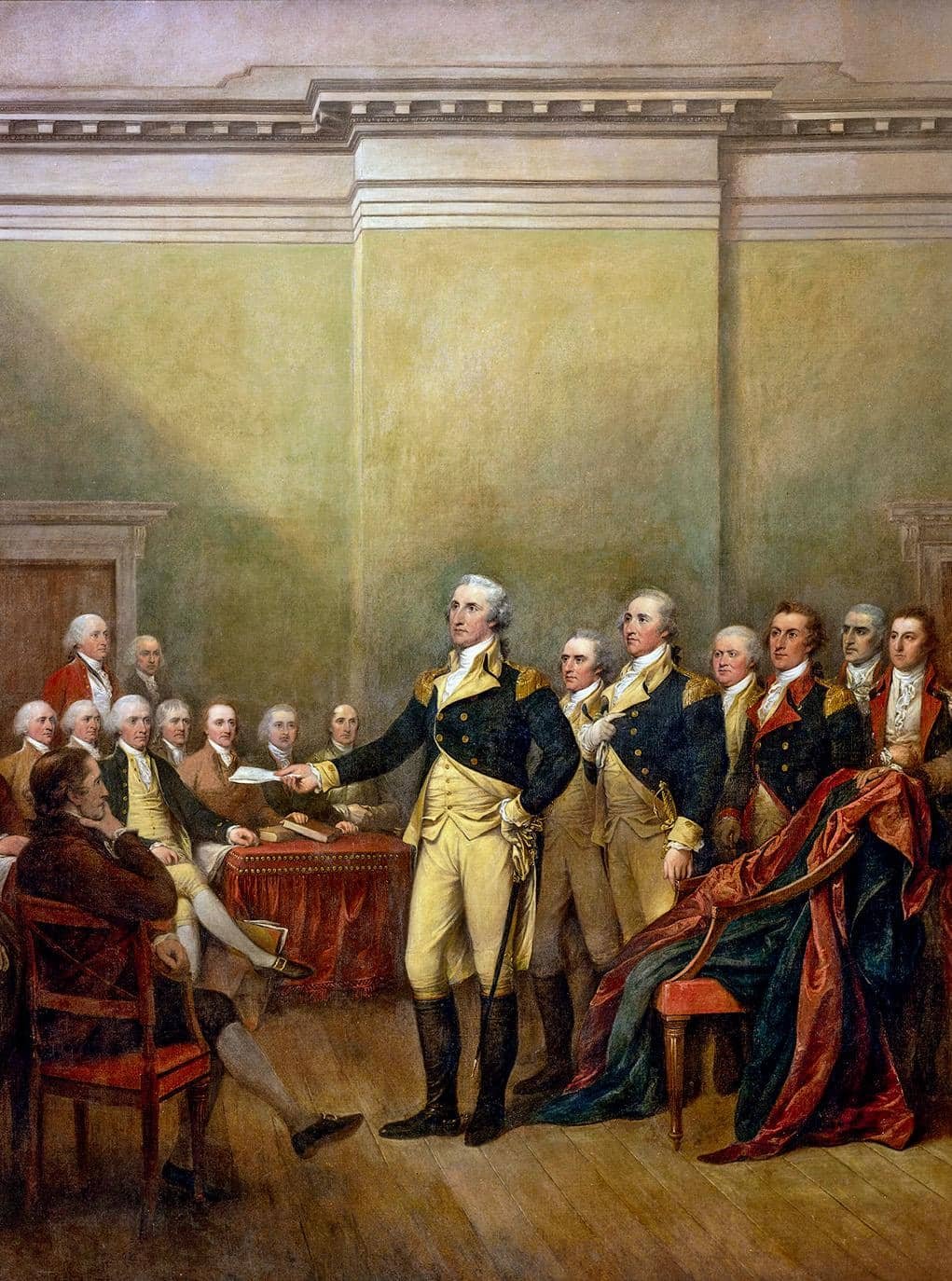
In his Farewell Address, George Washington made clear that broad participation is essential to a healthy and lively democracy. He did not write his address because he believed the American experiment was failing. He wrote it because he believed it was worth preserving. His warnings were not predictions of collapse, but instructions for care.
Every generation inherits the same choice: not whether democracy will be perfect, but whether it will be practiced. A republic is renewed when citizens remember that political opponents are still partners in self-government. It grows through ordinary acts—listening across disagreement, accepting lawful outcomes, insisting on truth, and placing the common good above temporary victory.
President Washington trusted the people enough to step away from power. That trust remains his final gift. Democracy endures when citizens accept that trust—not as a burden, but as an opportunity.