James Madison - Bill of Rights
… Another Document?
To understand the history of the Founding of the United States and the challenges the Founding Fathers confronted, you must be familiar with some of the important documents which were created in the 1770s and 1780s.
The first decisive step was the United States Declaration of Independence, adopted in 1776. The thirteen colonies had for years grown increasingly dissatisfied with British rule under George III. Their grievances were not limited to taxes such as the duty on tea, but extended to a deeper constitutional principle: laws were imposed by a Parliament in which the colonies had no elected representation. What began as resistance to imperial policy soon developed into a far more ambitious undertaking—the deliberate creation of a state independent of monarchy.
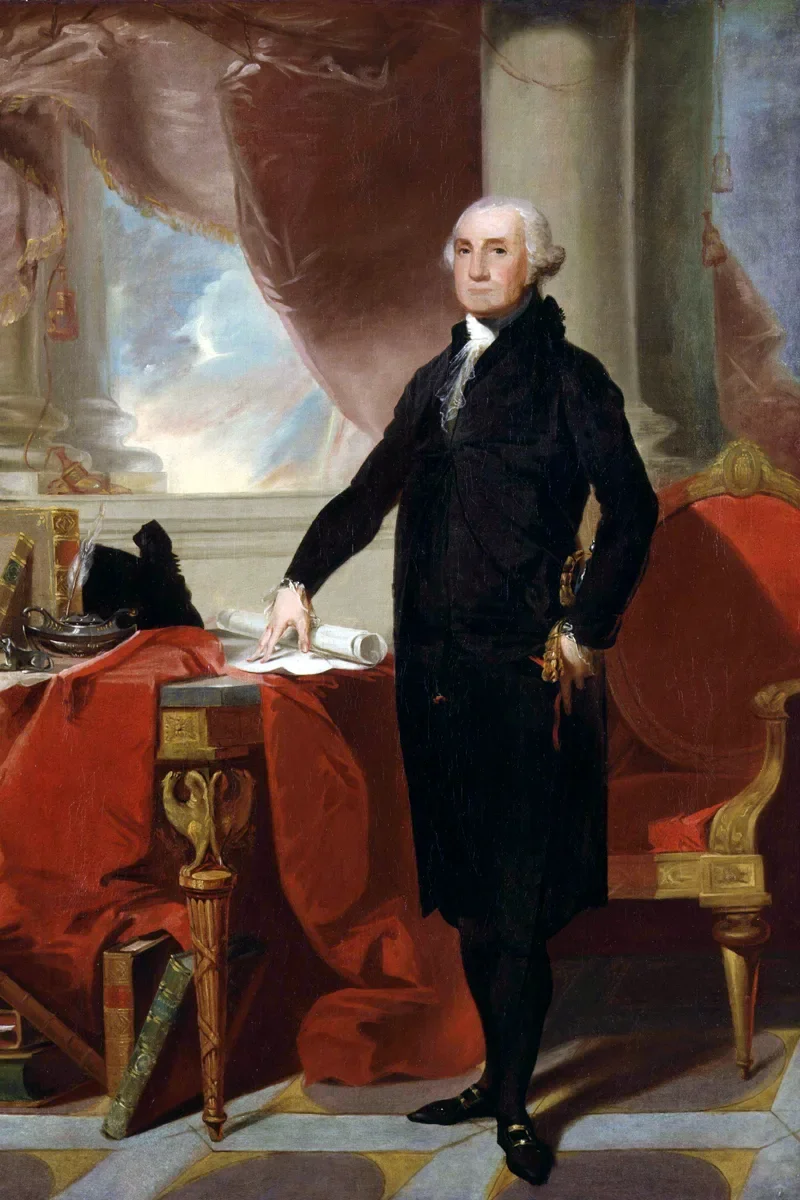
This political break immediately led to the American Revolutionary War, fought on American soil for seven difficult years. Victory was far from certain until the Continental Army, commanded by George Washington, gradually secured the military advantage that compelled Britain to negotiate. Peace was formally concluded in the Treaty of Paris, signed in Paris in 1783, by which Britain recognized the independence of the new republic.
Yet independence did not immediately produce stable government. The first constitutional framework, the Articles of Confederation, described the union as a “firm league of friendship” among sovereign states. It preserved local independence but granted only limited authority to the central government. During the 1780s, the weaknesses of this arrangement became increasingly visible: war debts remained unpaid, inflation weakened the currency, and Congress lacked the power to levy taxes or regulate commerce effectively.
Out of this uncertainty arose a second founding. Political reflection deepened, and public debate intensified through essays later collected as The Federalist Papers. In Philadelphia, delegates from the states met to reconsider the future of the union. Among the fifty-five men who attended the Constitutional Convention were several figures whose influence would shape the nation for generations.
The result was the United States Constitution of 1787, opening with words that would become both political principle and civic promise: “We the People of the United States …”. The Constitution established a republic grounded not in hereditary authority but in representation, law, and institutional restraint. Legislative, executive, and judicial powers were carefully separated, while checks and balances were intended to prevent the concentration of power in any single branch.
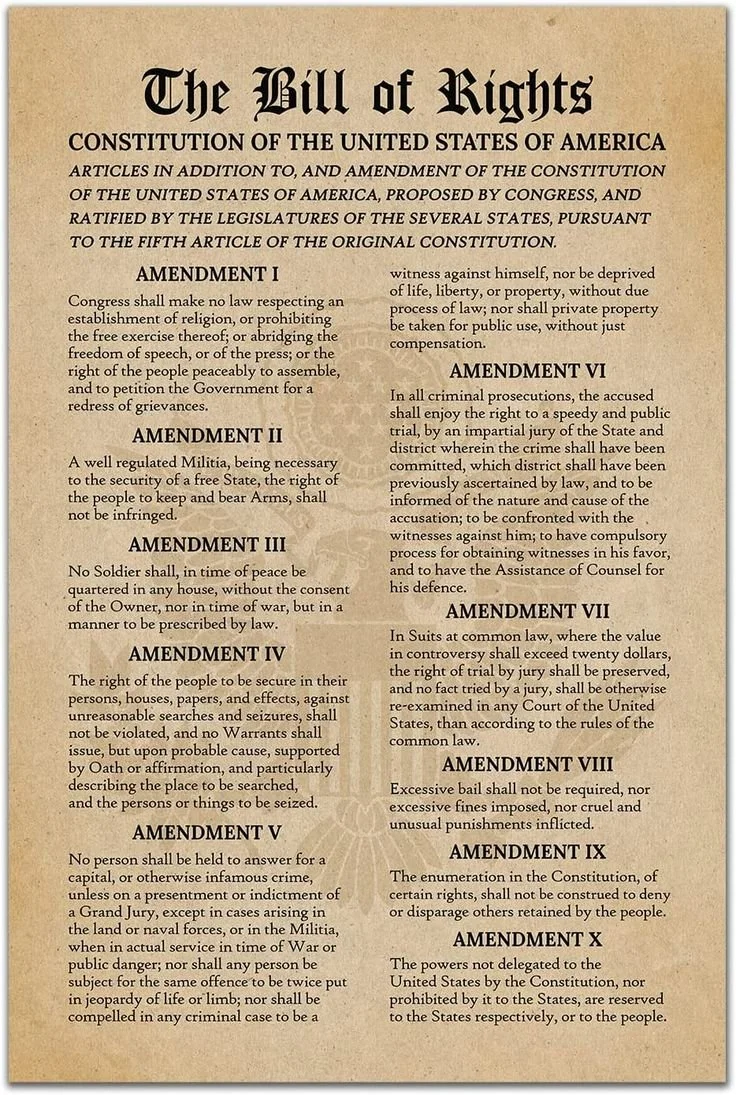
Even this new framework, however, did not end debate. Many feared that a stronger federal government might threaten personal liberty. Their concerns led to the adoption of the United States Bill of Rights in 1791. These first ten amendments protected freedom of religion, speech, press, assembly, and petition, while also securing legal safeguards against arbitrary power—among them due process, fair trial, and protection against unreasonable searches.
Together, these documents became the constitutional architecture of American democracy: a careful balance between authority and liberty, between Alexander Hamilton’s confidence in energetic government and Thomas Jefferson’s enduring suspicion of concentrated political power.